Something compelled us to buy today’s Post-Courier Online newspaper and BINGO we came across this advert inviting guests to attend the “IMPROVED TVET FOR EMPLOYMENT PROJECT”. We’re very passionate about this topic, hence we’ve just registered online to attend this event in person to hopefully air our views on it. We believe that TVET, Skilled Labor, Trades roles are NOTORIOUSLY UNDERESTIMATED IN PNG as a pivotal anchor of the PNG Economy, and do not get the attention it deserves to take this workforce and it’s stakeholders to the next level. This is one of the reasons why we started our organization, to empower our Trade/Skilled Workforce to win in the world of job seeking. #WokEmWok#ThPNGRecruiter
Image 1: Advert in Post-Courier Page 58, 11/10/24 regarding the 2024 National TVET Forum.
Been a while since we put out a blog post but here we go, here’s the first one in a long time.
This is in regards to a post we shared on our LinkedIn page regarding an article on a cool partnership between Papua New Guinea’s Urban Youth Employment Project II and Coca-Cola Euro-Pacific Partners.
But to summaries what was discussed, we found some good information for anyone who’s interested in getting themselves involved in the project. If your one of those interested and are living in Port Moresby and Lae (they’re the only 2 locations in PNG where the UYDP II Project is operational in), refer to the below details taken from the LinkedIn convo on how you get do so:
WHERE CAN I FIND THE URBAN YOUTH EMPLOYMENT PROJECT II (UYEP II) OFFICE?
As mentioned in the LinkedIn post link above, the UYEP II Project is only operational in Port Moresby and Lae. So there office locations are as follows below:
PORT MORESBY UYEP II OFFICE LOCATION:
NCDC Annex Building, Level 1
LAE CITY UYEP II OFFICE LOCATION:
Lae City Authority Offices, Level 1, Morobe Haus
WHAT IS THE CRITERIA TO MEET TO BE ELIGIBLE FOR THE UYEP II?
1. You must be between the ages of 16-29 years. 2. You must not have been employed in the last 6 months. 3. You must have not been in school for the last 6 months. 4. Must have been living in NCD / Morobe Province for the last 12 months.
*For Port Moresby, the UYEP II is currently getting youths from Moresby North West electorate. The UYEP II will be available to youths living in Moresby North-East and Moresby South electorates in 2025.
LEARN ABOUT OUR JOBSEARCH ESSENTIALS FOR PAPUA NEW GUINEANS ONLINE COURSE HERE: https://courses.reelae.com/courses/job-search-essentials-for-papua-new-guineans/?v=322b26af01d5
But to summarize it all, here’s a list of why the UYEP II is important to youths in PNG:
Employment Opportunities: The project addresses the critical issue of youth unemployment by offering job training and employment opportunities. It helps young people in cities like Port Moresby, where unemployment rates are high, gain practical skills and work experience.
Poverty Reduction: By facilitating access to short-term employment and vocational training, UYEP II provides a pathway out of poverty for young people who might otherwise struggle to find formal work.
Skill Development: UYEP II focuses on skills development and training, which are essential for youth to become more competitive in the job market. This can increase their chances of long-term employment and financial independence.
Community Impact: Through public works and community service, the project not only benefits youth but also helps improve urban infrastructure, leading to better living conditions for the wider population.
Crime and Social Issues: High youth unemployment in urban areas is often linked to rising crime and social unrest. By engaging young people in meaningful work and training, UYEP II helps reduce these risks, contributing to a more stable and productive society.
In essence, UYEP II provides critical support to the youth in PNG (Port Moresby and Lae at the moment) by enhancing their employability, reducing poverty, and fostering a more secure urban environment in Port Moresby, Lae City and hopefully all over Papua New Guinea in the near future.
Em tasol, thanks for reading and do follow us on all our platforms, leave a comment below and contact us if your a Jobseeker looking for means and ways to find employment or an Employer looking for affordable but quality Recruitment & HR services or advice.
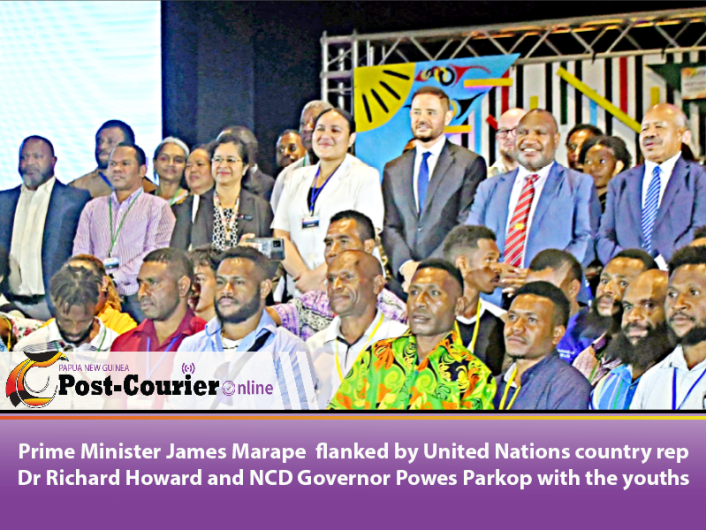
In light of Prime Minister James Marape’s recent call for youths to create their own employment (Link to news article:https://www.postcourier.com.pg/uyep-create-jobs-for-youth/ , article image take from this too) , it is essential to explore practical ways the young people of Papua New Guinea can generate their own job opportunities. With the job market limited, particularly for university graduates, self-employment and entrepreneurship become viable paths. Here are ten ways PNG youth can take charge of their futures:
1. **Start a Small Business**: From retail to services, small businesses can cater to local needs. E.g, selling Phone Credits, food at schools, water at sports events, etc.
2. **Embrace Agriculture**: Farming and agriculture are untapped sectors with enormous potential for local and export markets.
3. **Handicrafts and Traditional Arts**: PNG’s rich culture can be a source of income through arts and crafts sold to tourists.
4. **Technology and Innovation**: Youth can leverage technology to offer services such as web development, digital marketing, or app development. E.g, creating and selling an online course on a topic of interest of yours online on the ReeLae online learning platform (Link to site: https://courses.reelae.com/?v=322b26af01d5).
5. **Freelance Services**: Skills in graphic design, writing, or virtual assistance can be monetized through freelance platforms.
LEARN ABOUT OUR JOBSEARCH ESSENTIALS FOR PAPUA NEW GUINEANS ONLINE COURSE HERE: https://courses.reelae.com/courses/job-search-essentials-for-papua-new-guineans/?v=322b26af01d5
6. **Tourism Initiatives**: Creating unique local tours or accommodations can attract both local and international visitors.
7. **Food and Catering Services**: There’s always a demand for food, and catering can start small and grow as clientele increases.
8. **Youth Cooperatives**: Group efforts in sectors like farming or fishing can lead to shared success. Cleaning around your neighbourhoods, towns is another form of this.
9. **Education and Training**: Offering tutoring services or vocational training in specific skills can address local educational needs.
10. **Social Entrepreneurship**: Addressing social issues while making a profit, such as recycling or community health initiatives, can also create jobs.
By exploring these opportunities, the youth of Papua New Guinea can not only secure their own futures but also contribute to the nation’s economic growth.
Thanks for reading and let us know if you have any questions on this topic. #WokEmWok #ThePNGRecruiter
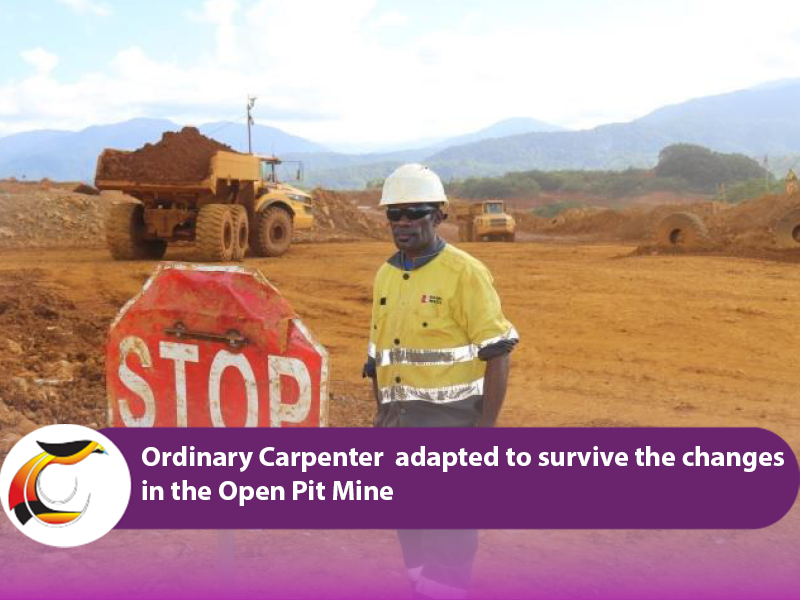
Canute Alohea, at Ramu NiCo Management LTD. Image from Post-Courier (https://www.postcourier.com.pg/from-carpenter-to-open-pit-mine-supervisor/)
Here is a great article in the Post-Courier from last year about a guy named Canute Alohea, who started with the Ramu NiCo Mine (Madang Province, PNG) as a Carpenter but over the course of his 10 years of employment with them and through attending numerous in-house trainings, he’s now a Supervisor of the Open Pit Mine there (/https://www.postcourier.com.pg/from-carpenter-to-open-pit-mine-supervisor/)
This article show a great example of what Transferrable Skills can do in helping a Carpenter like Canute to becoming a Mining Pit Supervisor. Now you may say that it’s only because the in-house trainings Canute attended enabled him make a successful shift from Carpentry and into Mine Pit Supervising, you are right but Transferrable Skills can be realized and utilized at the jobseeker level to obtain jobs fast.
SO WHAT EXACTLY ARE TRANSFERRABLE SKILLS?
Here’s what we found about Transferrable Skills:
Transferable skills are abilities, knowledge, or experiences that can be applied and adapted across various roles, industries, or situations. These skills are not tied to a specific job or field but can be utilized in different contexts. Transferable skills are valuable because they enable individuals to transition between jobs, sectors, or even career paths more smoothly. They are often considered fundamental skills that contribute to overall success and effectiveness in the workplace. Some examples of transferable skills include:
Communication: The ability to convey information clearly and effectively, whether through verbal, written, or non-verbal means.
Problem-solving: The capacity to analyze issues, identify solutions, and implement effective strategies to overcome challenges.
Leadership: Skills related to guiding, motivating, and coordinating individuals or teams to achieve common goals.
Time management: The skill of efficiently organizing and prioritizing tasks to maximize productivity and meet deadlines.
Adaptability: The capability to adjust to new situations, environments, or requirements with flexibility and resilience.
Critical thinking: The capacity to objectively evaluate information, assess situations, and make informed decisions.
Collaboration: The ability to work effectively with others, fostering teamwork, and leveraging collective strengths.
Creativity: Skills related to generating innovative ideas, approaches, or solutions to solve problems or improve processes.
Emotional intelligence: The ability to understand, manage, and express emotions appropriately, both in oneself and in others.
Technical proficiency: Proficiency with various tools, software, or equipment relevant to specific industries or roles.
These skills are often sought after by employers because they contribute to an individual’s overall competence and adaptability in the workplace, regardless of the specific job or industry. Additionally, transferable skills can be developed and honed over time through education, training, and real-world experiences, making them valuable assets for career growth and professional development. (https://chat.openai.com/share/ca4fdee1-26b8-4ada-9f95-5a0d4c565fe5)
In laymen’s terms, Transferrable skills can be carried over from one job to another. These skills don’t necessarily have to be thought in school, but can be learned on the job, at home in your own time, in a sports team, in church, anywhere, etc.
SO HOW CAN TRANSFERRABLE SKILLS HELP LESSEN THE EFFECTS OF UNEMPLOYMENT IF REALISED BY ALL CURRENT AND FUTURE JOBSEEKERS?
Here’s what we found in regards to the above questions:
If all current and future job seekers possess transferable skills, it can significantly mitigate the effects of unemployment in several ways:
Enhanced employability: Individuals with transferable skills are more adaptable and versatile, making them attractive candidates for a wider range of job opportunities. Employers value these skills because they indicate a candidate’s ability to contribute effectively in various roles and environments.
Smooth career transitions: Transferable skills enable job seekers to transition more seamlessly between industries or occupations. This flexibility reduces the time spent searching for suitable positions and increases the likelihood of finding employment sooner, even in industries experiencing growth while others decline.
Increased resilience: Transferable skills empower individuals to navigate periods of unemployment with greater resilience. They can leverage these skills to explore alternative employment options, such as freelancing, temporary work, or starting their own businesses, thereby reducing reliance on traditional employment channels.
Upskilling opportunities: Recognizing the value of transferable skills, job seekers may invest in ongoing learning and development to strengthen these skills further. This proactive approach not only enhances their employability but also positions them for future career advancement and opportunities in emerging industries or sectors.
Networking advantages: Individuals with transferable skills can leverage their diverse experiences and abilities to build broader professional networks. Networking can lead to job referrals, mentorship opportunities, and access to hidden job markets, increasing the likelihood of securing employment during periods of unemployment.
Demonstrated value to employers: Job seekers who emphasize their transferable skills during the application and interview process can effectively communicate their potential value to prospective employers. By highlighting how their skills can benefit the organization in various capacities, they stand out as valuable assets, even if they lack direct experience in a particular role or industry.
Overall, the widespread recognition and utilization of transferable skills among job seekers can contribute to a more resilient workforce, reducing the negative impacts of unemployment and fostering greater adaptability in an ever-changing labor market (https://chat.openai.com/share/ca4fdee1-26b8-4ada-9f95-5a0d4c565fe5).
Transferable skills can be acquired and developed through various means, including:
Education: Many transferable skills, such as communication, critical thinking, and problem-solving, can be cultivated through formal education. Courses in fields like communication studies, psychology, business administration, or liberal arts often focus on developing these skills.
Work Experience: Previous employment provides opportunities to develop transferable skills. Whether through leadership roles, teamwork on projects, or facing challenges that require problem-solving, work experience offers practical opportunities to hone these abilities.
Volunteering: Volunteering for community organizations, non-profits, or charitable causes can help develop transferable skills such as communication, teamwork, leadership, and adaptability. Volunteering often involves diverse tasks and interactions, providing valuable learning experiences.
Internships and On-Job-Training Programs: Participating in internships or cooperative on-job-training programs allows students/apprentices to gain practical experience in a professional setting. These opportunities provide exposure to real-world challenges and help develop transferable skills relevant to the workplace.
Professional Development Workshops and Seminars: Attending workshops, seminars, and conferences focused on topics like leadership, communication, time management, and other transferable skills can enhance your abilities and provide valuable insights from experts in the field.
Online Courses and Tutorials: Numerous online platforms offer courses and tutorials on a wide range of transferable skills. Websites such as Coursera, LinkedIn Learning, Udemy, ReeLae and Khan Academy provide accessible resources for self-directed learning.
Networking and Mentoring: Building relationships with professionals in your field or industry can provide opportunities to learn from their experiences and gain insights into developing transferable skills. Mentors can offer guidance, support, and feedback to help you grow professionally.
Extracurricular Activities: Participation in extracurricular activities such as sports teams, student organizations, or hobby groups can foster transferable skills like teamwork, leadership, communication, and time management.
By actively seeking out opportunities to develop and strengthen transferable skills through these various avenues, individuals can enhance their overall competence, adaptability, and employability in the workforce (https://chat.openai.com/share/ca4fdee1-26b8-4ada-9f95-5a0d4c565fe5).
By taking part in the above, you are giving yourself a chance to develop skills that are produced from basically taking part in organized activities for free. All one needs is to make time available to take part. But now that you’ve read this, we hope you have a sense of direction and goals in place on what you want to obtain from such activities and organizations through volunteerism and charity.
So when you go into a job interview with zero job experience, you got your Transferrable Skills to rely on, they’re documented in your CV and Cover Letter and you have references to back your Transferrable Skills from wherever you obtained them from. If everyone realized these skills before graduating from our schools and colleges, we’d have less unemployment issues in our country. That’s one of our many theories on how we can empower ourselves to win in the world of job seeking in PNG.
Thanks for reading and comment and let us know your thoughts, follow us on LinkedIn Facebook and Instagram and sign up to our blog if you haven’t yet.
On Tuesday, the 25th of October 2022, while scrolling down on my mobile’s Facebook app that evening, I found a link to a report whose title caught my attention. Australian Broadcasting Corporation (ABC) Reporter Kyle Evans’ report focused on Papua New Guinea’s “unemployment crisis.” The report’s title read, “PNG’s unemployment crisis pushing young people to breaking point.”
To summaries the report’s specifics, Kyle first interviews Bernard Kakori, an Economics Degree Holder who has been searching for employment in Port Moresby for over two and a half years and has sent over 100 applications but interviewed three times only, all of which he was unsuccessful. He knows others in similar situations who resort to crime to get by in the city.
He also mentions that bribery is common among potential employers in exchange for jobs. With the added pressure of meeting family expectations back home and the financial burden of supporting him with his job search, Bernard races against time to find employment.
Interviewed next was Julian Melpa. She is a research intern at the PNG National Research Institute (NRI). She released a research paper related to the same issue of youth unemployment in the country titled “Spotlight Volume 15, Issue 13: Factors that restrict the availability of job opportunities for the youth in Papua New Guinea“. I then came across some startling statistics. Julian mentions that “after surveying people living in Morata, Port Moresby, she found that 32 percent (n=103) of the urban youths out of 318 respondents are employed.
Furthermore, 68 percent (n=215) are unemployed while only 12 percent used (n=14) are engaged in formal jobs and 86 percent (n=89) are in the informal sectors respectively. It clearly shows that only a few youths in PNG are involved in formal employment while the majority are unemployed.” (Melpa, 2022)
And to finish the report, the President of the Port Moresby Young Chamber of Commerce, Natasha Austin, says that a contributing factor was that undergraduates lacked basic skills when entering the workplace due to a “gap between the industry and institutions,” which is demotivating managers to hire graduates.
I’ve been working in the recruitment industry for seven years and am familiar with all the issues and possible resolutions raised in the report. They are the primary motivators for me to start this blog, as its goal is to Empower Papua New Guineans with information to win in the job-seeking world.
Also, as a Recruitment professional, I’m used to seeing opportunities in the jobs market for graduates go unnoticed. I’m constantly left disappointed by this as they become too prevalent. It’s not always the Government or Educational Institution’s fault, but it equally is the job seekers as well. That will be my point of view on this subject.
With that, here are three factors I believe are causing these perceived high levels of youth unemployment in PNG, along with three quick and simple resolutions a recent grad needs to incorporate in their job-seeking process to fight unemployment:
Lack of drive and persistence in pursuing jobs with a holistic approach
“Don’t put all your eggs in one basket” is a proverb I think of every time I see someone complain about a lack of job opportunities on LinkedIn or Facebook. The saying means “to not risk everything on one venture.” Many people have risked everything for one job opportunity, probably because it’s their dream job or because they think they’re entitled to it. What happens when someone does this? They start feeling impatient and frustrated when awaiting feedback; they’re “ghosted” after applying for a job or unsuccessful in getting a role. This feeling builds negativity in themselves towards the system and the world, hence the various complaints about the lack of job opportunities in PNG.
The best thing to do before getting into this ugly, wasteful position is to constantly apply for multiple roles that suit your qualifications and experience. It may be tiresome or consume money to do this daily, but hey, if you can habitually pay for betel nuts, cigarettes, or Mobile Phone credits, there is no reason to be demotivated towards spending money towards finding a job, is there? So, you must have the drive and persistence to pursue employment in a holistic approach by applying to jobs every day via whatever platform. I guarantee you will get some good results.
2. Lack of knowledge on tailoring applications to be screened efficiently by Recruiters
A stage of the Recruitment Process is creating a pool of strong candidates that match the requirements of a vacancy recently advertised from all the applications received in response to it. A longlist has to be submitted to the supervisors or hiring managers to approve the shortlist of candidates to interview. Recruiters need to complete this as soon as possible. The longer the vacancy stays open, the more issues it creates in the organization, as there needs to be someone competent in the role to offset its responsibilities, which can contribute to a delay in achieving company goals and targets.
And one of the typical delays in this stage of the recruitment process is when recruiters review disorganized CVs, which consumes the recruiter’s time in reviewing. For a list of the ten most common CV mistakes to avoid, click on the link HERE to have a read.
So what’s the solution to this? There is so much information on the internet; all one has to do is research. You can start by asking employed friends or relatives to give you a copy of their CV and format yours according to theirs. So there’s no harm in copying their CV format. After all, they did get their current job with that CV. Or search for information on the internet. The world’s most extensive library is in the palm of our hands, in the form of a mobile phone, so we should start using it effectively if we are serious about getting employed.
What about Cover Letters? The purpose of the Cover Letter is for one to match their experience with the requirements & responsibilities of the vacancy. If you can complement between 95 – 100 % of the requirements/responsibilities of the vacancy with your qualifications and experience, you have a great chance of being called in for an interview. What happens if you can’t? That would mean you are not suitable for the vacancy or have failed to display the experience and qualifications you possess to match the vacancy’s requirements in your Cover Letter. I’ve seen this countless times, and it always disappoints me as competent people for vacancies sell themselves short in the recruitment process.
And what about Support Documents? The best way to send them is by merging them into one PDF document (the best form to keep your CV + Support Documents in). Also, this allows for quick referencing when matching the info stated in your CV with the support documents. Avoid sending copies of your support documents separately/one by one or by taking pictures of them. It gives the impression of being disorganized or unprepared; someone, the organization, wants to avoid hiring. And where can you merge PDF documents? Online, of course. There are many sites where you can merge all your PDF documents into whatever arrangement is best for you. Just type into the Google search engine “Merge PDF Documents online,” and it will give you an array of sites where you can upload, merge and download your documents.
Knowledge on the best way of presenting your application in a well-organized manner is all on the internet and with your friends & family who have jobs. A well-organized and structured application allows recruiters to select suitable candidates to be interviewed, allowing for timely feedback to be given to all stakeholders and for the right candidate to be chosen for the vacancy.
3. Lack of motivation to take alternative career paths where qualifications can be applicable in
What jobs can someone have with a Diploma or a Degree in Accounting? You’re probably thinking of job titles like Accountant, Accounts Officer, Accounts Payable Officer, Accounts Receivable Officer, etc. That’s it? Wrong. People with these qualifications as Bank Tellers, Customer Care Agents, Warehouse Assistants, Fuel Pump Attendants, etc.
The above is an example of the various career paths one can take regardless of qualification. One of the main reasons it takes time for recent graduates to get employed is that they’re applying for jobs according to their studies. That is understandable, as their teachers/lecturers taught them this. But it then causes new grads to be unemployed for years due to this mindset, as most of those jobs are still occupied or require experienced personnel to fill them. So what measures should a Certificate/Diploma/Degree Holder take to give themselves a chance at being employed ASAP?
The key is to never have preferences for specific jobs when starting your journey to obtaining employment, especially when you have no work experience. It would be best if you got any position to build your experience at this stage, as all jobs these days require candidates to have a certain amount of experience. Just take the job, whether it’s on a volunteer basis or the rate is right on the National Minimum Wage of K3.50. See it as an opportunity to build your experience so there will be no issues applying for jobs requiring years of experience later.
When you don’t have any expectations or preferences of what sort of roles suit you, you’ll open yourself up to more job opportunities. Just get your foot in the door and make the most of the opportunity.
So to conclude, I do agree that PNG’s youth are on the brink of an “unemployment crisis,” and while the government needs to do its bit by creating more employment opportunities, it will take time, as all public processes do in this country. The longer we wait for help, the worse the crisis gets. So our youth must empower themselves with the knowledge to apply for jobs effectively, extensively, and consistently for whatever job opportunities are available, whether voluntary or paid right on minimum wage to fight against the unemployment crisis. Wok em wok, wokim tasol.